Diabetes Caused by the Pancreas Itself
Most people have heard of Type 1 and Type 2 diabetes. Far fewer have heard of Type 3c — also called pancreatogenic diabetes — even though it is the form most directly tied to pancreatitis.
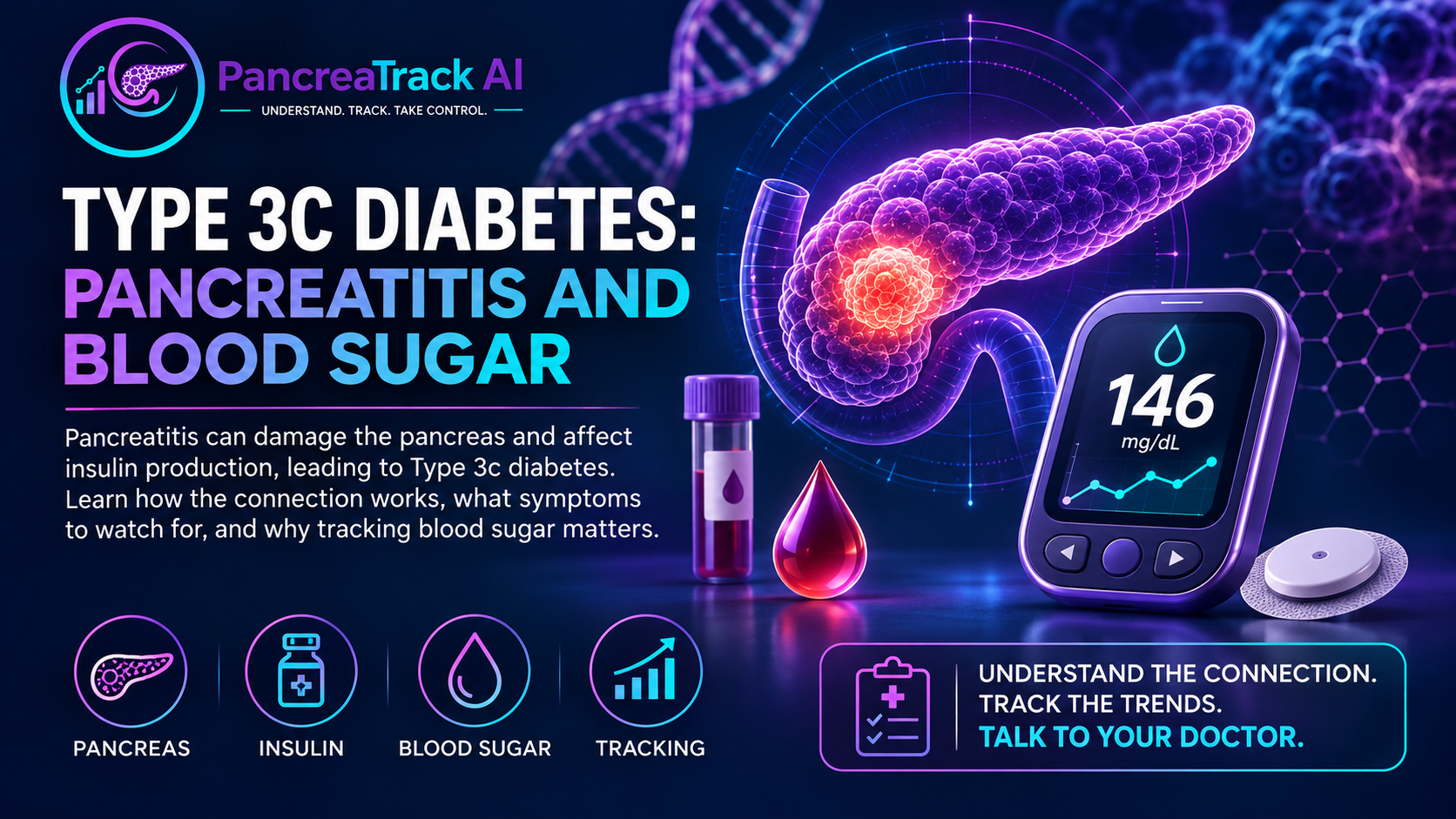
Type 3c diabetes is diabetes caused by damage to the pancreas itself: chronic pancreatitis, pancreatic surgery, pancreatic cancer, or other pancreatic disease. The pancreas is damaged, so it can no longer make enough of the hormones that control blood sugar. It is not the same disease as Type 2, and treating it as if it were can miss what is actually going on.
If you live with chronic pancreatitis and your blood sugar has started running high — or a doctor has told you that you have Type 2 diabetes — this distinction is worth knowing about, and worth raising.
How Type 3c Differs from Type 1 and Type 2
All three types end in the same place — blood sugar that runs too high — but they get there by different routes, and that changes the management.
|
|
Type 1 |
Type 2 |
Type 3c |
|---|---|---|---|
|
Cause |
Autoimmune attack on insulin-producing cells |
Insulin resistance, often with reduced insulin over time |
Damage to the whole pancreas from disease or surgery |
|
Insulin |
Deficient |
Resistance first, deficiency later |
Deficient |
|
Glucagon |
Usually preserved |
Usually preserved |
Deficient too — the pancreas loses both hormones |
|
Digestion |
Usually normal |
Usually normal |
Often impaired — enzyme production falls as well (exocrine insufficiency) |
|
Typical history |
Often younger onset, no pancreatic disease |
Often linked to weight, family history, lifestyle |
History of pancreatitis, pancreatic surgery, or pancreatic disease |
The glucagon point matters more than it sounds. Glucagon is the hormone that raises blood sugar when it drops too low. In Type 3c, the pancreas loses insulin and glucagon, so the body's usual defence against low blood sugar is weakened. That is one reason people with Type 3c can be more prone to hypoglycaemia (low blood sugar) — and why a low reading deserves attention, not just a high one.
The digestion point matters too. The same damaged pancreas that under-produces insulin also under-produces digestive enzymes. So Type 3c often arrives alongside malabsorption: food is not fully digested, nutrients are not fully absorbed, and weight can fall even when appetite seems normal. Diabetes and enzyme insufficiency are two sides of the same damaged organ, and they need to be managed together.
Why It Gets Missed
Type 3c is frequently misdiagnosed as Type 2. There are a few reasons for that:
- Type 2 is far more common, so it is the first label a clinician reaches for when blood sugar is high.
- The symptoms overlap — thirst, frequent urination, fatigue, blurred vision — so nothing in the symptoms themselves points to the pancreas.
- The pancreatic history is not always connected to the blood sugar. A person can be treated for chronic pancreatitis by one team and for "Type 2 diabetes" by another, without anyone joining the two together.
- There is no single test for Type 3c. The diagnosis is made from the combination: diabetes plus evidence of pancreatic disease — a history of pancreatitis, imaging showing pancreatic damage, or enzyme insufficiency — rather than from one blood result.
That mislabelling has practical consequences. Management built for insulin resistance does not automatically fit a pancreas that cannot make insulin or glucagon and cannot digest food properly. Getting the label right changes the questions: not just "how do we lower blood sugar?" but "how do we replace what the pancreas no longer makes — insulin, and enzymes — and how do we guard against lows?"
If you have chronic pancreatitis and diabetes, it is worth asking your doctor directly: could this be Type 3c rather than Type 2? It is a reasonable question, and it is one clinicians are increasingly aware of.
Signs Worth Noticing
Type 3c diabetes can develop gradually, as pancreatic damage builds over years of chronic pancreatitis. Signs that blood sugar may be rising include:
- thirst and urinating more often than usual, including at night
- fatigue that does not match how much you have slept
- blurred vision
- slow-healing cuts, or frequent infections
- unexplained weight loss — which, with pancreatitis, can also reflect malabsorption rather than blood sugar alone
Low blood sugar has its own signs, and they matter here because of the missing glucagon: shakiness, sweating, a fast heartbeat, confusion, irritability, or feeling suddenly very hungry. A low that comes on after a missed or delayed meal, or after taking insulin without enough food, is not something to push through.
None of these signs on their own proves Type 3c — they are the reasons to get blood sugar checked and to bring your pancreatic history into the conversation, not to diagnose yourself.
What to Track
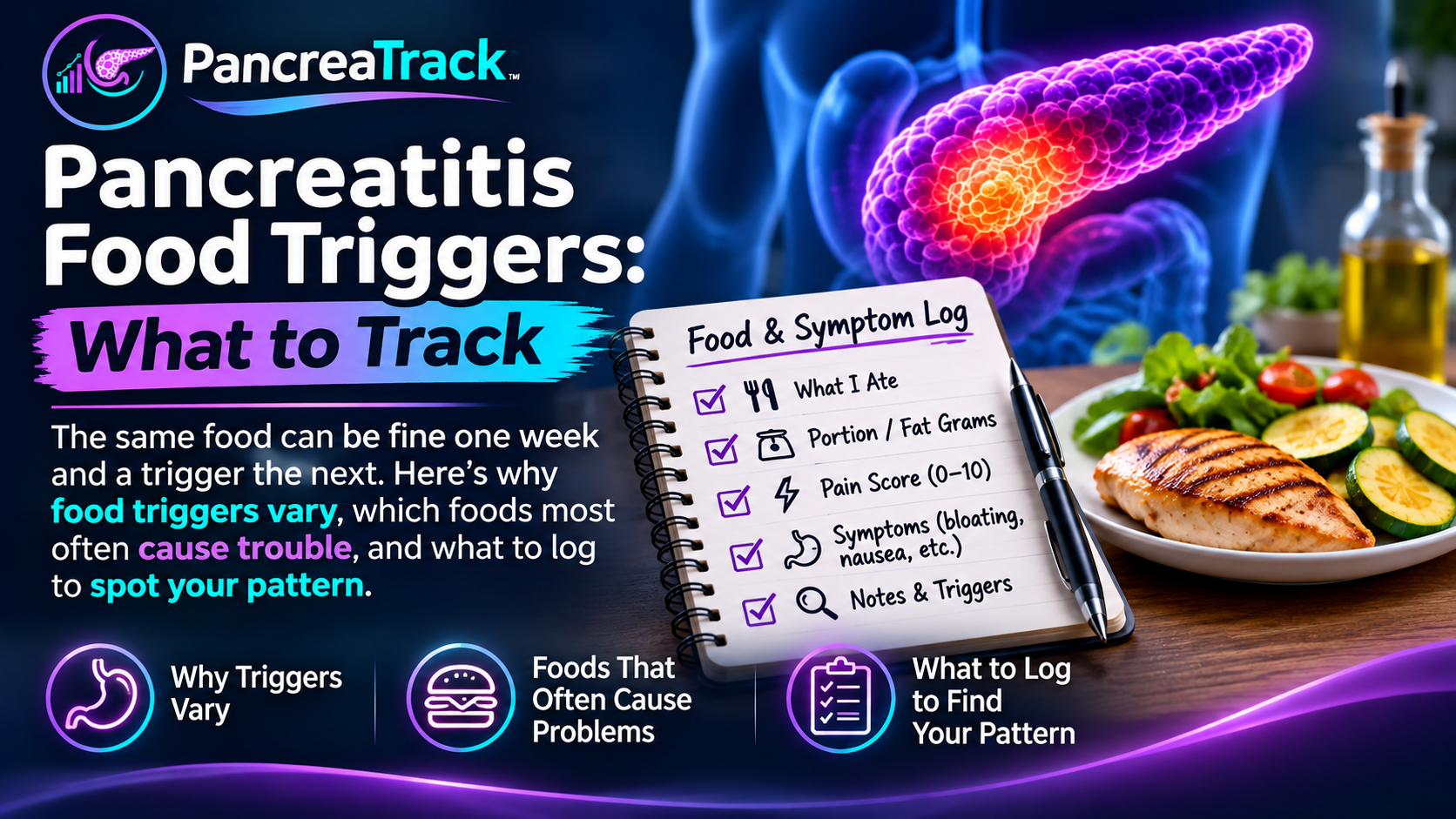
Because Type 3c involves blood sugar, digestion, and weight all at once, the log that helps your doctor is a combined one:
- Glucose readings, with the time and whether they were before or after a meal — highs and lows both count, and lows are especially worth flagging
- Meals — what you ate, roughly how much, and whether it was fatty or hard to digest
- Enzyme doses and timing (PERT) — what you took, and whether it was with the meal, since enzyme timing changes how much of a meal is actually absorbed
- Pain score (1–10) — pain and blood sugar often move together, and a flare can throw both off
- Weight — a slow downward trend is easy to miss without a record, and it is one of the clearest signs that malabsorption needs attention
- Symptoms after eating — bloating, nausea, oily or greasy stools, and any shaky or sweaty episodes that might have been a low
Over a few weeks, that log can show what a single blood test cannot: whether lows follow missed meals, whether highs follow particular foods, whether enzyme timing changes the picture, and whether weight is drifting down while nobody is watching it. That is the evidence a doctor needs to decide whether the Type 2 label still fits — and what to change if it does not.
When to Call Your Doctor
Get urgent medical care for:
- severe abdominal pain that your usual measures do not touch
- vomiting that will not stop, or being unable to keep fluids down
- fever over 100.4°F (38°C), or shaking chills
- yellowing of the skin or eyes (jaundice)
- a racing heartbeat, dizziness, or confusion
- signs of very low blood sugar that do not lift after treatment, or a low that leaves you confused or unable to help yourself
- pain that is rapidly getting worse instead of plateauing
And get checked soon — not urgently, but do not put it off — if you notice the signs of rising blood sugar listed above, unexplained weight loss, or repeated lows. If you are ever unsure, err on the side of being evaluated. The U.S. National Library of Medicine provides an overview of pancreatitis symptoms and complications for patients who want to learn more, and the National Pancreas Foundation offers educational resources on living with pancreatitis and communicating with your care team.
Why the Label Matters
Type 3c is not a rarer version of Type 2. It is a different condition with a different cause, a different hormone picture, and a different set of risks — including lows that the body is less able to correct on its own. Getting the label right does not change the past, but it changes the plan: which hormones need replacing, how enzymes fit in, and how closely lows need watching.
At PancreaTrack, we built our tracking tools for exactly that combined picture: quick pain, meal, enzyme, and glucose logging that takes seconds on a bad day, and turns into clear trends and doctor-ready summaries when you need them — so the next appointment starts with the whole story, pancreas included.
Sources
- U.S. National Library of Medicine (MedlinePlus) – Pancreatitis. https://medlineplus.gov/pancreatitis.html
- National Pancreas Foundation – Pancreatitis educational resources.
*⚕️ Medical Disclaimer: PancreaTrack is a health tracking tool designed to help patients log and organize their symptoms — it is not a substitute for professional medical advice, diagnosis, or treatment. Always consult your physician or a qualified healthcare provider if you are experiencing pain, new symptoms, or any change in your condition. Never disregard professional medical advice or delay seeking it because of something you have read on this site.*