Same Organ, Two Very Different Conditions
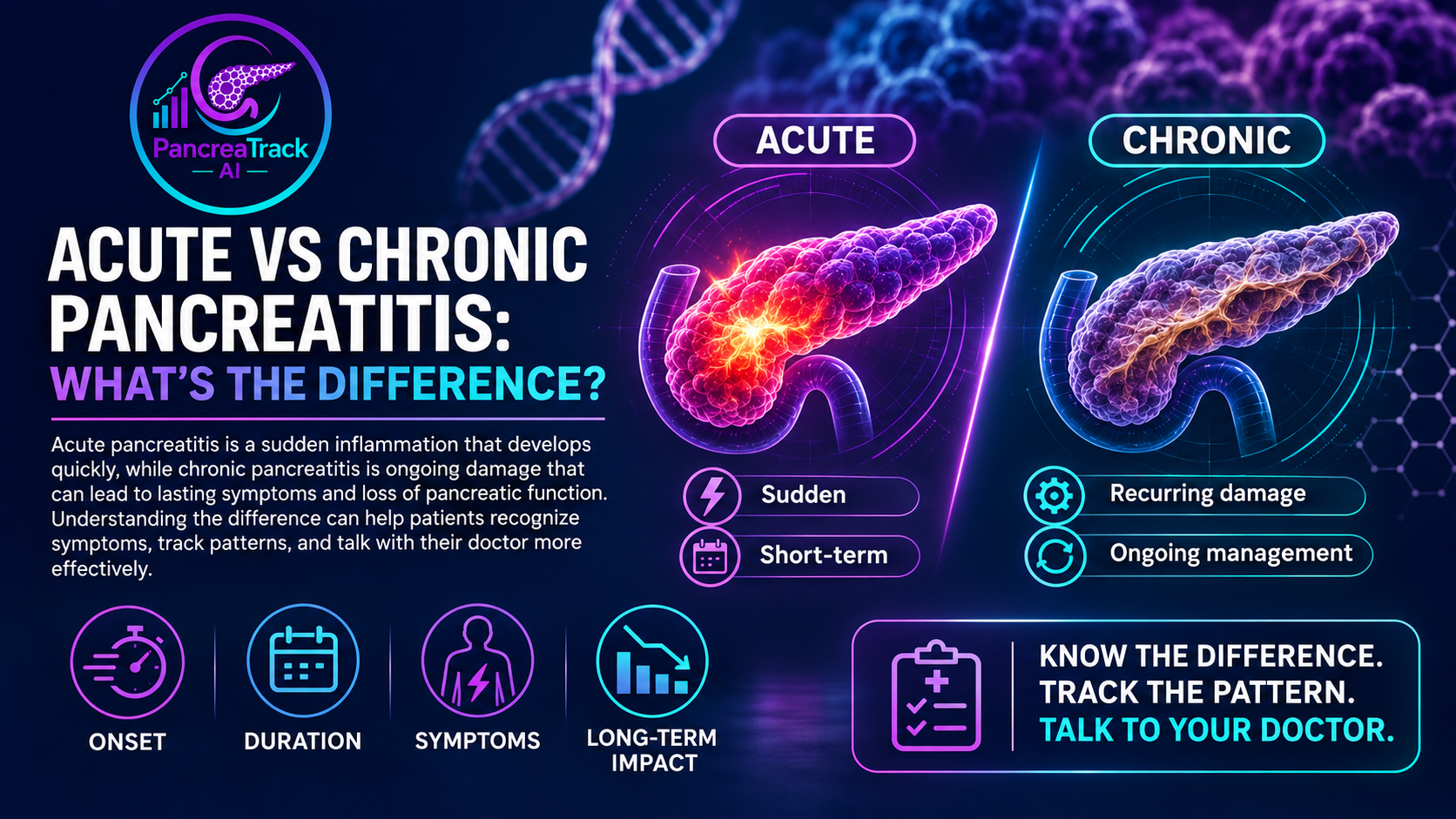
Pancreatitis is inflammation of the pancreas — the organ that makes digestive enzymes and hormones like insulin. It happens when digestive enzymes activate too early and begin irritating the pancreatic tissue itself. But "pancreatitis" is really two conditions that share a name: acute and chronic. They start differently, they are caused by different things, and they change what you should be watching for.
Knowing which one you have — and that some people move from one toward the other — changes the conversation with your doctor. It also changes what is worth tracking day to day.
Acute Pancreatitis: Sudden, Severe, and Usually Short-Lived
Acute pancreatitis occurs suddenly — often over a few hours — and is usually a single episode. The classic symptom is severe pain in the upper abdomen, often radiating through to the back, along with nausea and vomiting. Fever is common.
The most frequent cause is gallstones: a stone blocks the duct the pancreas shares with the gallbladder, and enzymes back up into the organ. Heavy alcohol use is the other leading cause. Other triggers include very high triglycerides, certain medicines, high calcium levels, abdominal trauma, and some infections and procedures.
With treatment — usually a few days in the hospital for IV fluids, pain relief, and monitoring — most episodes resolve within days, and the pancreas often recovers. But acute pancreatitis is still serious: severe cases can lead to complications, and repeated acute episodes can damage the pancreas over time. Some people who have recurrent acute pancreatitis go on to develop chronic pancreatitis.
Chronic Pancreatitis: Gradual, Progressive, and Permanent
Chronic pancreatitis is long-term inflammation that does not heal or improve. It gets worse over time and leads to permanent damage — scarring of the pancreas and a gradual loss of both its digestive-enzyme production and its hormone production.
The most common cause is heavy alcohol use over many years. Other causes include cystic fibrosis and other inherited disorders, high levels of calcium or fats in the blood, some medicines, autoimmune conditions, and blockages in the pancreatic duct.
The symptoms overlap with acute pancreatitis — pain in the upper abdomen that often radiates to the back, nausea, vomiting — but chronic pancreatitis adds the signs of a pancreas that is losing function:
- pain that recurs or never fully goes away, often worse after eating
- weight loss, even when eating normally
- oily or greasy stools (steatorrhea) — a sign food is not being digested properly
- signs of malnutrition as nutrient absorption falls
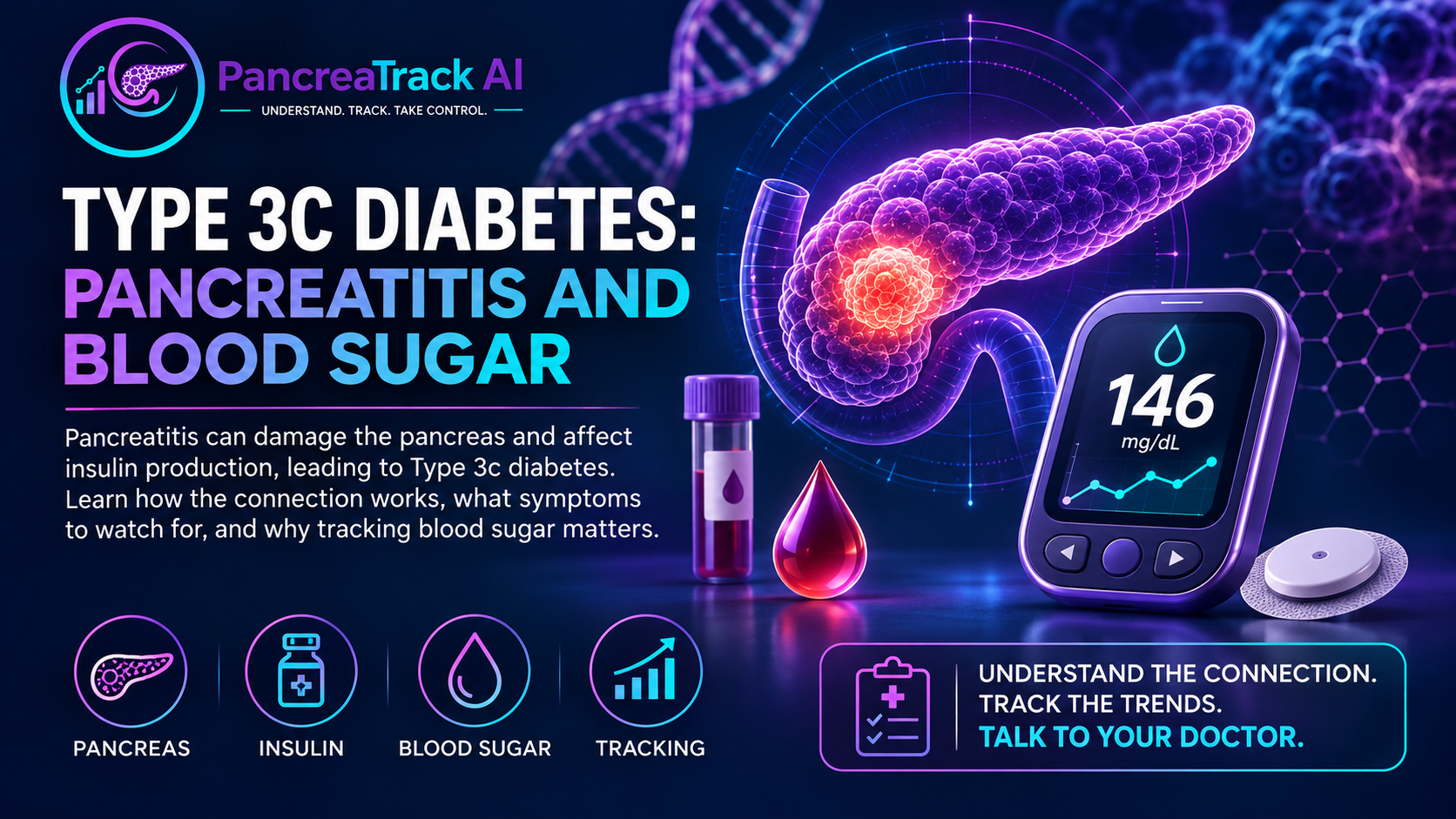
- diabetes caused by pancreatic damage — Type 3c diabetes — which is frequently misdiagnosed as Type 2
Because the damage is permanent, chronic pancreatitis is managed, not cured: the goals are controlling pain, replacing the enzymes the pancreas can no longer make (PERT), managing blood sugar, and protecting nutrition.
Acute vs. Chronic at a Glance
|
|
Acute pancreatitis |
Chronic pancreatitis |
|---|---|---|
|
Onset |
Sudden, over hours |
Gradual, or as repeated episodes |
|
Duration |
Usually days |
Months or years |
|
Damage |
Often reversible |
Permanent scarring and loss of function |
|
Most common causes |
Gallstones, heavy alcohol use |
Heavy alcohol use over years, inherited conditions |
|
Key symptoms |
Severe upper abdominal pain, nausea, vomiting, fever |
Recurrent pain, weight loss, oily stools |
|
Enzyme production |
Usually returns after recovery |
May stay permanently reduced |
|
Diabetes risk |
Possible after severe disease |
Common as the disease advances |
What to Track for Each
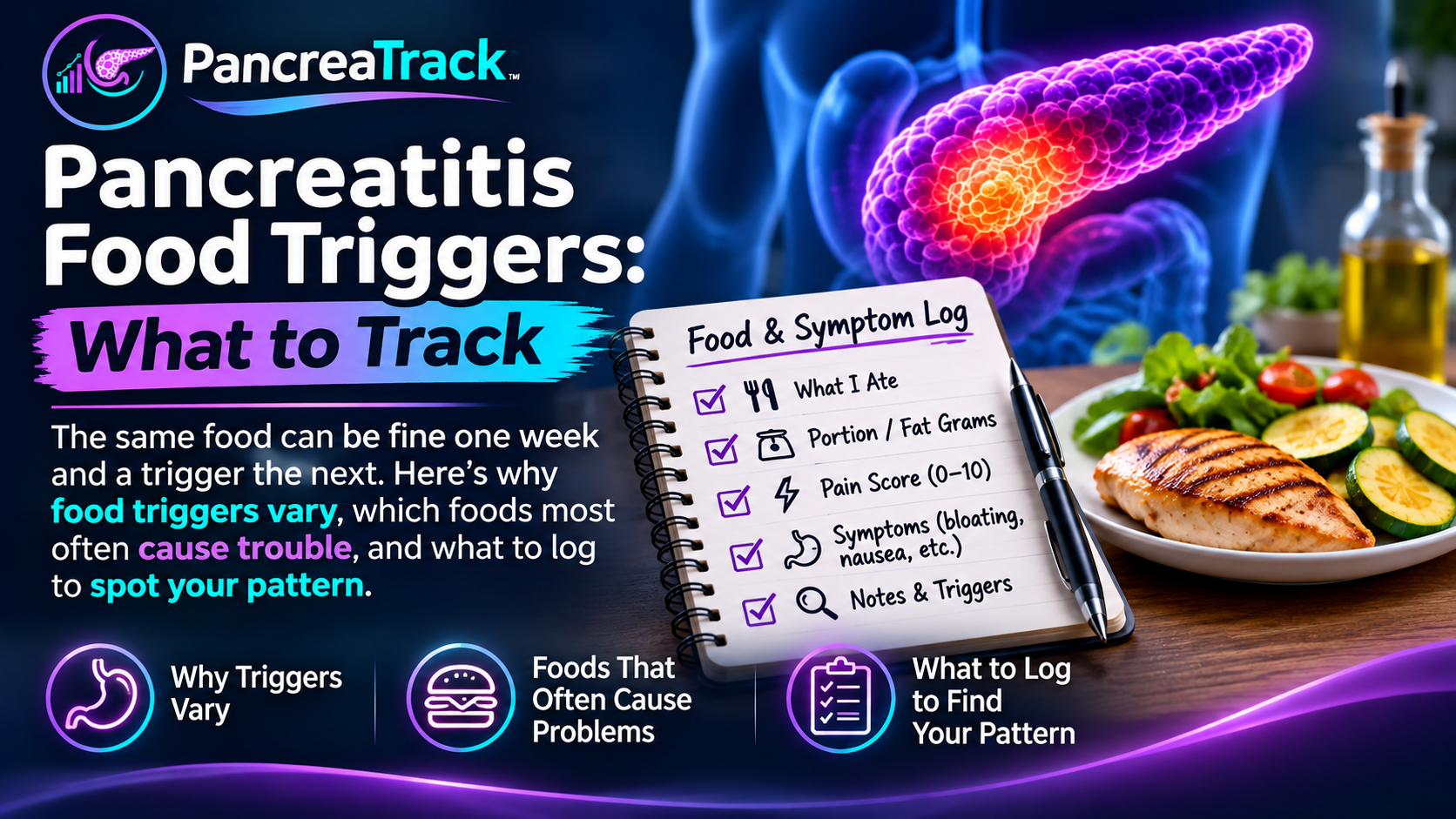
The tracking that helps your doctor is slightly different depending on which form you have — and if you have had both, note which episode you are logging.
After an acute episode, track:
- How the pain started — sudden onset, and what you ate or drank beforehand
- Pain severity (1–10) and whether it radiates to your back
- Fever, nausea, and vomiting — and whether you can keep fluids down
- Gallstone or alcohol history your doctor has already flagged, so new episodes can be compared with old ones
- Recovery time — how many days until you felt like yourself again
With chronic pancreatitis, track the slow-moving numbers too:
- Pain patterns over weeks, not just bad days — when it peaks, what eases it
- Weight — a slow downward trend is easy to miss without a record
- Stool changes — oily or greasy stools signal enzyme insufficiency
- Enzyme doses and timing (PERT) — what you took, when, and whether meals still left you bloated or in pain
- Glucose readings, if you have Type 3c diabetes — blood sugar and pancreatic damage move together
That long view is exactly what a single office visit cannot reconstruct from memory. A log that shows three months of weight, pain, enzyme timing, and glucose is a very different conversation from "I've been in pain a lot lately."
When to Call Your Doctor
Either form of pancreatitis can turn serious quickly. Get urgent medical care for:
- severe pain that your usual measures do not touch
- vomiting that will not stop, or being unable to keep fluids down
- fever over 100.4°F (38°C), or shaking chills
- yellowing of the skin or eyes (jaundice)
- a racing heartbeat, dizziness, or confusion
- pain that is rapidly getting worse instead of plateauing
If you are ever unsure, err on the side of being evaluated. The U.S. National Library of Medicine provides an overview of pancreatitis symptoms and complications for patients who want to learn more, and the National Pancreas Foundation offers educational resources on living with pancreatitis and communicating with your care team.
Why the Distinction Matters
Acute pancreatitis is an event to recover from. Chronic pancreatitis is a condition to manage for life. The label shapes the treatment, the follow-up, and the questions worth asking — including whether diabetes that appears alongside pancreatic disease is Type 2 or Type 3c, a distinction that changes management.
At PancreaTrack, we built our tracking tools for both sides of that: quick pain, meal, enzyme, and glucose logging that takes seconds on a bad day, and turns into clear trends and doctor-ready summaries when you need them — whether you are recovering from one episode or managing a condition for years.
Sources
- U.S. National Library of Medicine (MedlinePlus) – Pancreatitis. https://medlineplus.gov/pancreatitis.html
- National Pancreas Foundation – Pancreatitis educational resources.
*⚕️ Medical Disclaimer: PancreaTrack is a health tracking tool designed to help patients log and organize their symptoms — it is not a substitute for professional medical advice, diagnosis, or treatment. Always consult your physician or a qualified healthcare provider if you are experiencing pain, new symptoms, or any change in your condition. Never disregard professional medical advice or delay seeking it because of something you have read on this site.*