The Same Food, a Different Day
One of the most frustrating parts of living with pancreatitis is how unpredictable food can feel. A meal you ate without trouble last week leaves you in pain today. A food someone else with pancreatitis swears by is one you cannot tolerate at all.
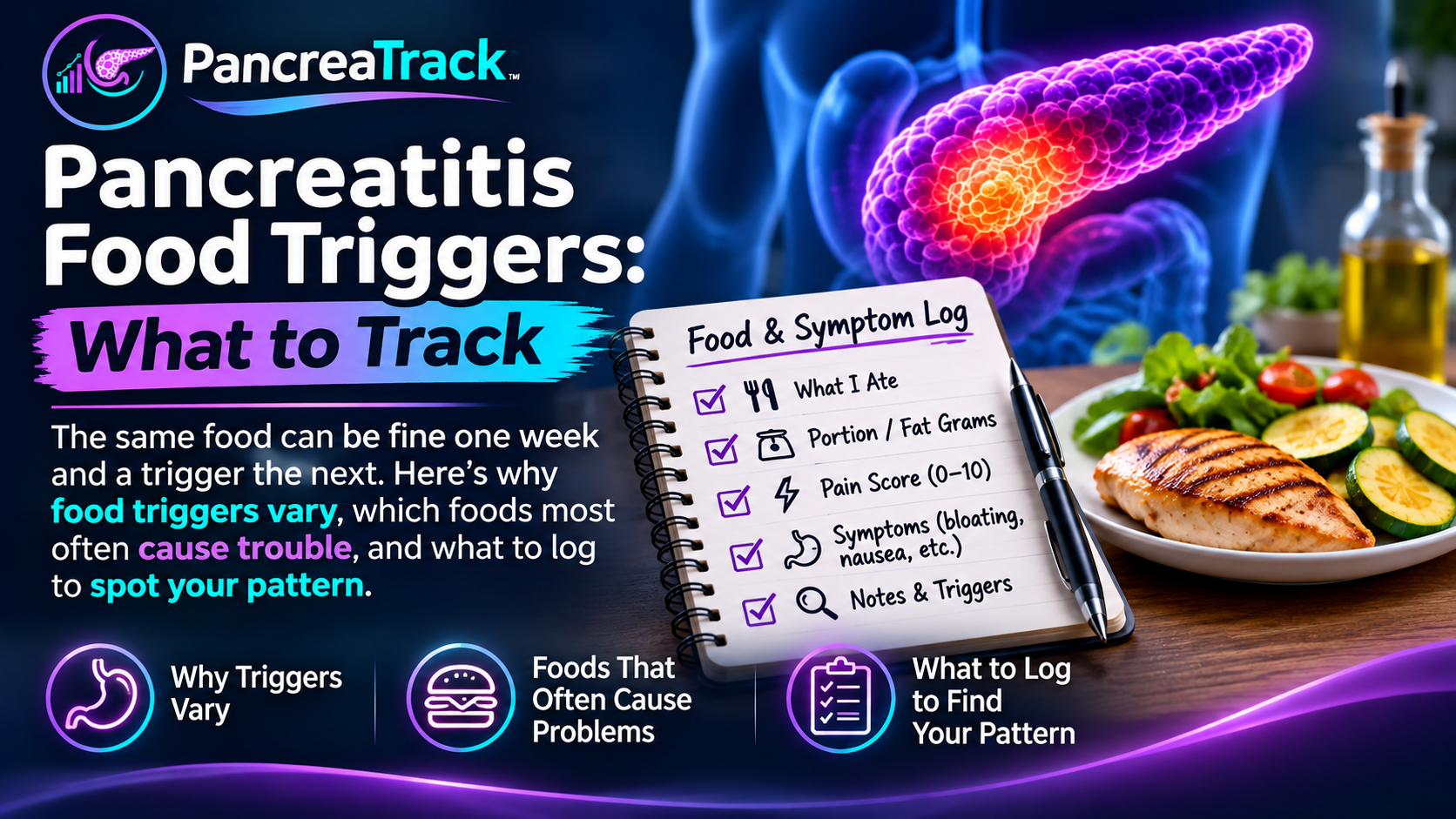
That unpredictability is real, and it has reasons. Food triggers in pancreatitis are rarely about a single "bad" food. They depend on the food itself, how much of it you ate, how it was cooked, what else you ate that day, and how your pancreas was already doing when you sat down to eat. Sorting that out from memory alone is almost impossible — which is why what you log matters more than what you remember.
Foods That Most Often Cause Trouble
There is no universal list of foods to avoid with pancreatitis, and triggers are individual. But some patterns show up again and again, and they are a useful place to start watching:
- High-fat foods — fried foods, fatty cuts of meat, full-fat dairy, creamy sauces, and rich desserts. Fat asks the most of the pancreas, because the pancreas makes the enzymes that digest it. When enzyme production is reduced, a fatty meal is the one most likely to leave you bloated, in pain, or rushing to the bathroom.
- Alcohol — a leading cause of both acute and chronic pancreatitis, and a common trigger for flare-ups even in small amounts.
- Large meals — a big portion can be harder to handle than the same food in a smaller serving. Many people find smaller, more frequent meals easier than three large ones.
- Spicy or heavily seasoned foods — these bother some people and not others, which is exactly why they are worth logging rather than assuming.
- Very sugary foods and drinks — especially relevant if pancreatic damage has affected blood sugar, as it does in Type 3c diabetes.
What is not on this list matters too. Plain, low-fat foods — lean protein, cooked vegetables, whole grains, fruit — are tolerated well by many people with pancreatitis. But "tolerated by many" is not the same as "safe for you." Your pattern is yours, and only your own log can show it.
Why the Same Food Can Be Fine One Week and a Trigger the Next
If a food were simply "safe" or "unsafe," tracking would be easy. In practice, several things change the outcome:
- Portion and preparation — a small piece of grilled chicken and a large fried portion are not the same meal, even though both are "chicken."
- Fat content of the whole day — a rich lunch may be fine on a light day and too much on a day that already included a fatty breakfast.
- Enzyme timing — for people on pancreatic enzyme replacement therapy (PERT), whether enzymes were taken, and when relative to the meal, can change how a meal lands.
- Your baseline that day — pain, stress, poor sleep, and an already-irritated pancreas can lower the threshold for a trigger.
- What you ate it with — alcohol with a fatty meal, for example, is a much heavier ask than either on its own.
That is why a food diary that only lists what you ate rarely cracks the pattern. The pattern lives in the combinations.
What to Log to Find Your Pattern
You do not need a perfect food diary. You need the few details that let a pattern show itself over a couple of weeks:
- What you ate, and roughly how much — enough detail to tell grilled from fried, and a snack from a full plate
- When you ate it — so symptoms can be matched to the meal that preceded them, usually within a few hours
- Pain score (1–10) and when it started, peaked, and eased
- Enzyme doses and timing (PERT) — what you took and whether it was with the meal
- Other symptoms — bloating, nausea, oily or greasy stools, and blood sugar readings if you track them
- The context — alcohol, a larger-than-usual portion, eating late, a stressful day
After two or three weeks, look for repeats rather than single incidents. One bad night after pizza proves very little. Pizza followed by pain three times out of four — especially when a smaller or lower-fat version of the same meal was fine — is a pattern worth taking to your doctor or dietitian.
Turning a Pattern Into a Plan
A pattern is only useful if it changes something. A few ways people use theirs:
- Shrink the trigger, don't ban the food — a smaller portion, a leaner cut, or a different cooking method sometimes keeps a favorite food on the menu.
- Time your enzymes with the meal — if you use PERT, the timing relative to eating is part of the pattern, not an afterthought. Ask your doctor whether your timing matches your meals.
- Plan around known triggers — if rich restaurant meals are a repeat trigger, a lighter meal earlier in the day or a smaller portion can leave more room.
- Bring the log, not the summary — "fatty meals seem to trigger pain" is a guess. A log showing dates, portions, enzyme timing, and pain scores is evidence your care team can work with.
And a caution worth stating plainly: restrictive diets carry their own risks, especially with a condition that already threatens nutrition and weight. Do not cut whole food groups on the basis of a hunch. Use the log to start a conversation with your doctor or a dietitian, not to replace one.
When to Call Your Doctor
Food triggers are a day-to-day management question, but some symptoms are not. Get urgent medical care for:
- severe pain that your usual measures do not touch
- vomiting that will not stop, or being unable to keep fluids down
- fever over 100.4°F (38°C), or shaking chills
- yellowing of the skin or eyes (jaundice)
- a racing heartbeat, dizziness, or confusion
- pain that is rapidly getting worse instead of plateauing
If you are ever unsure, err on the side of being evaluated. The U.S. National Library of Medicine provides an overview of pancreatitis symptoms and complications for patients who want to learn more, and the National Pancreas Foundation offers educational resources on living with pancreatitis and communicating with your care team.
Why Tracking Beats Guessing
Food is the part of pancreatitis you face three times a day, every day. That makes it the most tiring part — and the part where a good log pays off fastest. A few seconds of logging per meal turns "everything seems to hurt" into a short list of real triggers, portion sizes that work, and enzyme timing that helps.
At PancreaTrack, we built our tracking tools for exactly that: quick meal, pain, enzyme, and glucose logging that takes seconds on a bad day, and turns into clear trends and doctor-ready summaries when you need them — so the next meal is a decision you make with evidence, not a gamble.
Sources
- U.S. National Library of Medicine (MedlinePlus) – Pancreatitis. https://medlineplus.gov/pancreatitis.html
- National Pancreas Foundation – Pancreatitis educational resources.
*⚕️ Medical Disclaimer: PancreaTrack is a health tracking tool designed to help patients log and organize their symptoms — it is not a substitute for professional medical advice, diagnosis, or treatment. Always consult your physician or a qualified healthcare provider if you are experiencing pain, new symptoms, or any change in your condition. Never disregard professional medical advice or delay seeking it because of something you have read on this site.*