When a Flare Hits
If you live with pancreatitis, you probably know the feeling. Pain that was background noise an hour ago sharpens, spreads through to your back, and builds until it takes over the whole day — or the whole week. Eating becomes a gamble. Plans get cancelled. And once the flare finally settles, a frustrating question remains: what set that off?
A flare-up is one of the defining experiences of pancreatitis, for both acute and chronic patients. Understanding what is happening in your body during a flare — and capturing the right details while it unfolds — can turn a miserable episode into genuinely useful information for you and your care team.
What a Flare-Up Actually Is
During a flare, the pancreas becomes inflamed and irritated, and its digestive enzymes — which are supposed to activate in the small intestine — begin irritating the pancreatic tissue itself. That inflammation is what drives the characteristic upper abdominal pain that often radiates to the back, along with nausea, bloating, and pain that worsens after eating.
For patients with acute pancreatitis, a flare is the event itself: a sudden inflammatory episode that can range from mild to life-threatening. For patients with chronic pancreatitis, flares are spikes of inflammation and pain layered on top of ongoing, long-term pancreatic damage — which is why two patients can describe the "same" flare very differently.
Why Flares Happen
Not every flare has an identifiable cause, and that uncertainty is part of what makes them so frustrating. But common contributors include:
- a higher-fat meal or a larger portion than usual
- alcohol, even in amounts that were previously tolerated
- missed or mistimed pancreatic enzyme doses (PERT)
- dehydration
- infection or another illness stressing the body
- certain medication changes
- no clear trigger at all
Because the trigger is often something from the previous 24 to 48 hours — not the last thing you ate — a flare can feel completely random unless you have been keeping a record.
What to Track During a Flare
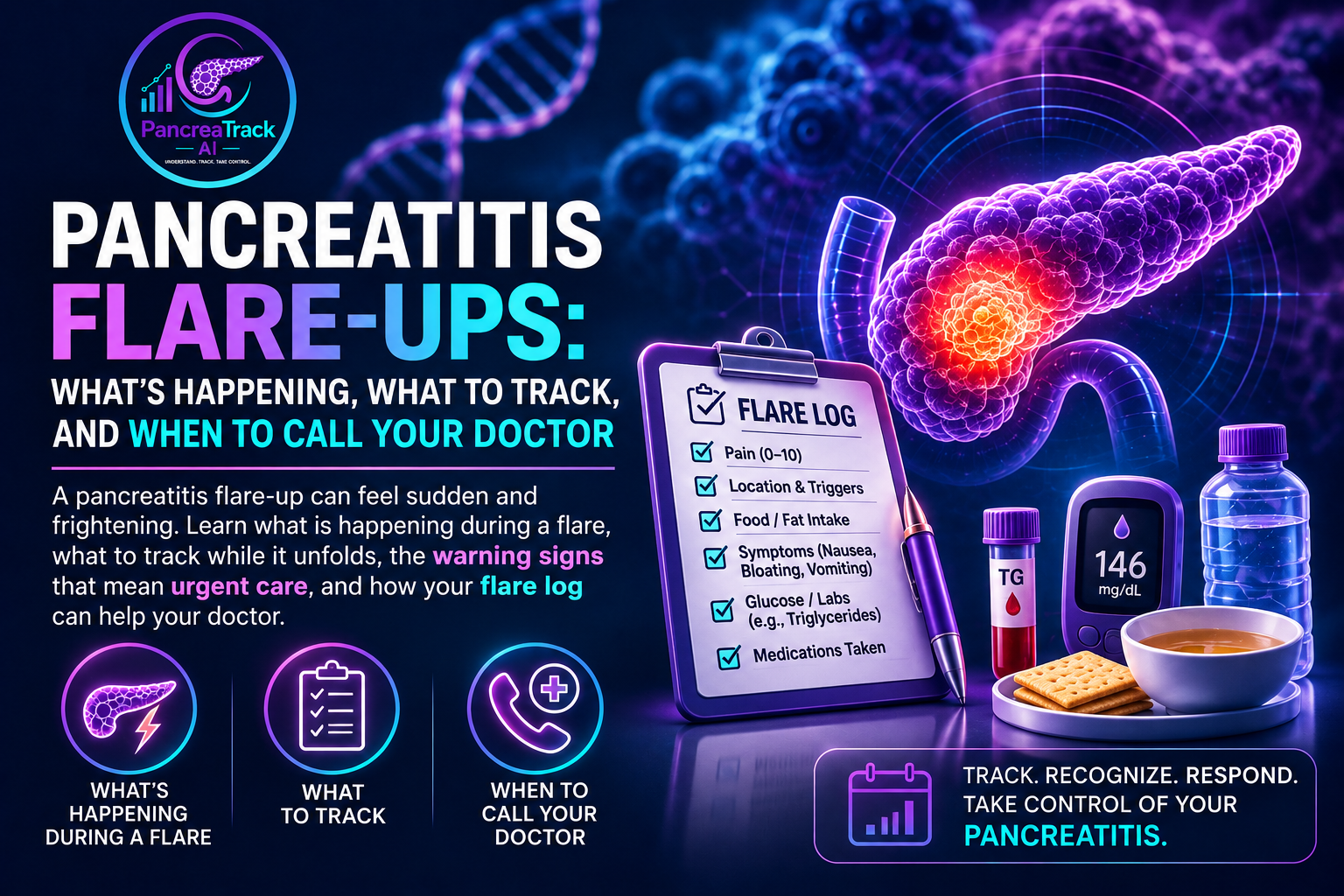
You do not need a perfect log. Even a rough record, captured while the flare is happening, is far more reliable than trying to reconstruct it from memory at your next appointment. Focus on:
- Pain severity (1–10) — and how it changes over hours, not just days
- Pain location — and whether it radiates to your back
- When it started — and how long it lasts
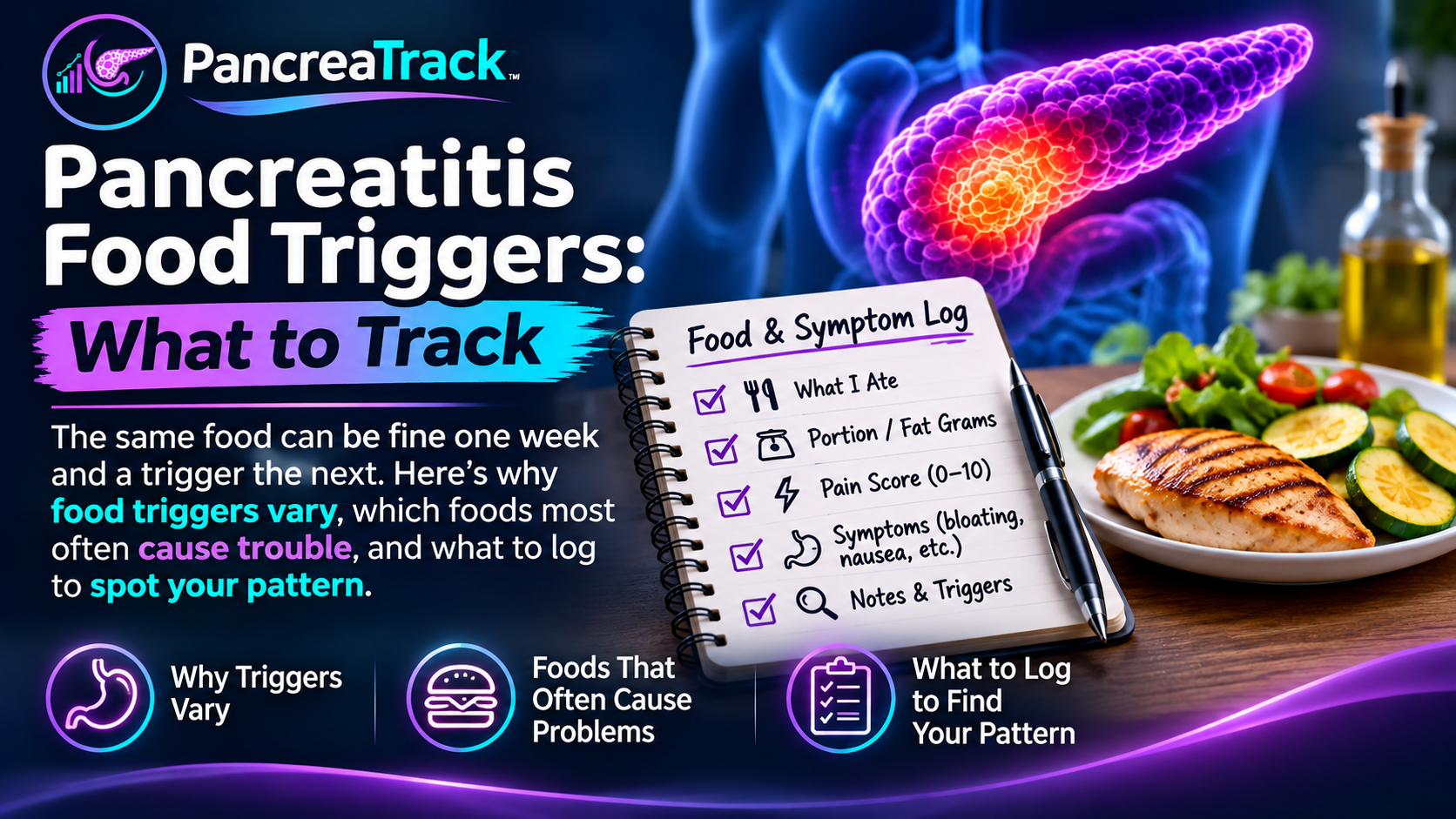
- What you ate and drank in the 24–48 hours before it began
- Enzymes and medications — what you took, the dose, and the timing
- Digestive symptoms — nausea, vomiting, bloating, bowel changes
- Temperature — fever during a flare matters (see below)
- Glucose readings, if you have Type 3c diabetes — flares and blood sugar often move together
Over several flares, this kind of log starts to reveal patterns: a fat threshold your body tolerates, a time of day your pain peaks, an enzyme timing that works better. That is information no single office visit can produce.
The National Pancreas Foundation offers additional educational resources on living with pancreatitis and communicating with your care team.
When a Flare Is an Emergency
Most chronic pancreatitis flares are managed at home or with guidance from your doctor's office. Some symptoms, however, mean the flare may be something more serious and needs urgent medical care:
- fever over 100.4°F (38°C), or shaking chills
- vomiting that will not stop, or being unable to keep fluids down
- severe pain that your usual measures do not touch
- yellowing of the skin or eyes (jaundice)
- a racing heartbeat, dizziness, or confusion
- pain that is rapidly getting worse instead of plateauing
If you are ever unsure, err on the side of being evaluated. The U.S. National Library of Medicine provides an overview of pancreatitis symptoms and complications for patients who want to learn more.
After the Flare: Turn It Into Information
When the pain settles, take five minutes to complete the record while it is still fresh: total duration, peak pain, what seemed to help, what you suspect triggered it. Then bring that summary to your next appointment — or better, share the trend. A single flare is an event. Three flares with the same pattern is a conversation that can change your treatment plan.
At PancreaTrack, we built our tracking tools for exactly these moments: quick pain, meal, enzyme, and glucose logging that takes seconds in the middle of a bad day, and turns into clear trends and doctor-ready summaries when you need them. You cannot prevent every flare — but you can make every flare teach you something.
Sources
- U.S. National Library of Medicine (MedlinePlus) – Pancreatitis.
- National Pancreas Foundation – Pancreatitis educational resources.
*⚕️ Medical Disclaimer: PancreaTrack is a health tracking tool designed to help patients log and organize their symptoms — it is not a substitute for professional medical advice, diagnosis, or treatment. Always consult your physician or a qualified healthcare provider if you are experiencing pain, new symptoms, or any change in your condition. Never disregard professional medical advice or delay seeking it because of something you have read on this site.*