Why Symptom Tracking Matters
Living with chronic pancreatitis often means trying to remember weeks of symptoms, pain flares, meals, medications, and digestive issues during a short medical appointment. By the time many patients sit down with their gastroenterologist or specialist, important details have already become blurry. Pain patterns fade together. Food triggers become difficult to pinpoint. Enzyme timing gets forgotten. Glucose fluctuations and bowel changes may seem random without context.
For many pancreatic disease patients, the hardest part is not just living through the symptoms — it is accurately communicating what daily life actually looks like between appointments.
That is why learning how to track pancreatitis symptoms can become one of the most powerful tools a patient has.
Tracking symptoms consistently helps create a clearer picture of what is happening over time. Instead of relying entirely on memory, patients can begin identifying trends and correlations that may otherwise go unnoticed.
What Symptoms Should You Track?
Pain Levels and Flare-Ups
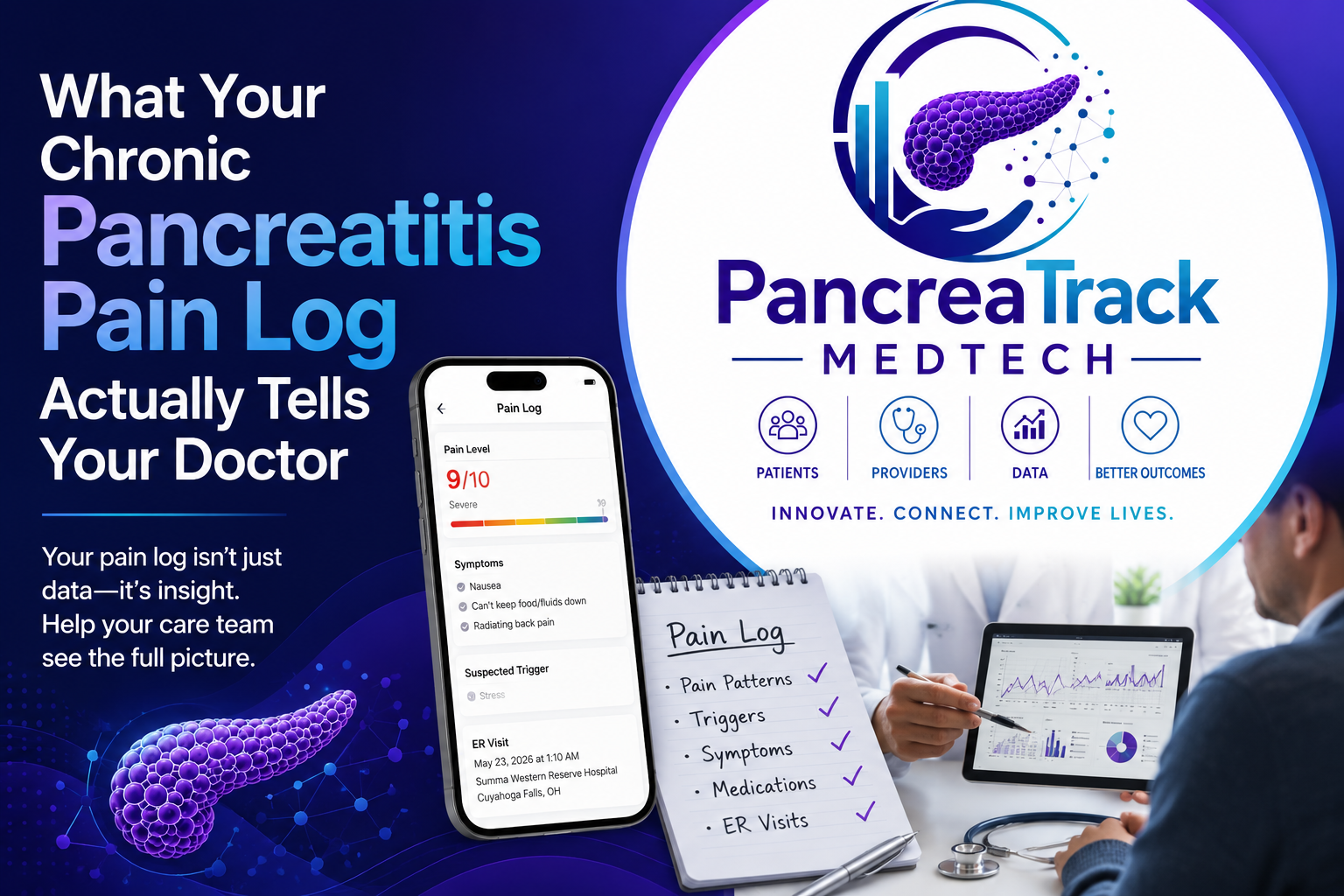
One of the most important things to document is pain. Many patients experience fluctuating pain throughout the day, and recording pain severity alongside meals, activity levels, or medications can provide valuable insight.
Helpful things to track include:
- pain severity (1–10)
- location of pain
- duration of flare-ups
- nausea or vomiting
- bloating
- pain after eating
Over time, patterns may begin to emerge that can help both patients and providers better understand symptom progression.
Meals and Food Triggers
Food tracking is equally important. Pancreatitis patients often develop anxiety around eating because symptoms can feel unpredictable.
Logging:
- meals
- fat content
- portion sizes
- beverages
- symptom reactions after eating
can help identify tolerated foods versus potential triggers.
For nutrition guidance related to pancreatic disease, the National Pancreas Foundation offers educational resources and dietary information.
Tracking Pancreatic Enzymes (PERT)
Why Enzyme Tracking Is Important
For patients living with Exocrine Pancreatic Insufficiency (EPI), tracking pancreatic enzyme replacement therapy (PERT) is another critical piece of the puzzle.
Recording:
- enzyme dosage
- timing
- digestive outcomes
- missed doses
can help identify whether enzyme therapy is adequately matched to meals.
Symptoms such as:
- oily stools
- bloating
- cramping
- diarrhea
- excessive gas
may indicate enzyme dosing issues.
The U.S. National Library of Medicine also provides additional information about pancreatitis symptoms and digestive complications.
Monitoring Bowel Health
An Overlooked Piece of Pancreatic Care
Bowel health is frequently under-discussed during appointments despite being highly relevant to pancreatic disease management.
Tracking:
- bowel frequency
- urgency
- stool consistency
- color changes
- floating stools
- digestive discomfort
can provide important clinical context.
Many patients use the Bristol Stool Scale to help standardize these observations and improve communication with providers.
Tracking Glucose and Type 3c Diabetes
Understanding the Pancreas–Glucose Connection
For patients dealing with pancreatogenic diabetes, often referred to as Type 3c diabetes, glucose tracking adds another layer of understanding.
Blood sugar fluctuations may correlate with:
- meals
- stress
- illness
- pancreatic function
- pain flare-ups
Logging glucose trends alongside symptoms can reveal patterns that may otherwise be difficult to recognize.
You can also learn more about Type 3c diabetes and pancreatic disease in our related guide.
The Centers for Disease Control and Prevention (CDC) provides additional information about blood sugar management and diabetes care.
Turning Symptom Data Into Better Conversations
The Goal Is Better Communication — Not Perfection
The goal of symptom tracking is not to obsess over every symptom or replace medical care. The goal is to create organized longitudinal context that helps patients and healthcare providers have more productive conversations.
When symptoms are documented consistently over time, appointments can shift from vague recollections toward more meaningful discussions grounded in real observations.
Many patients currently rely on:
- notebooks
- spreadsheets
- phone notes
- generic wellness apps
However, pancreatic disease often requires more specialized tracking that takes into account digestive symptoms, enzyme use, nutrition, and glucose variability together instead of separately.
As digital health tools continue evolving, more pancreatic disease patients are looking for ways to better organize their daily experiences and improve communication with their care teams.
For patients navigating the complexity of pancreatic disease, that clarity can make a meaningful difference.
⚕️ Medical Disclaimer: PancreaTrack is a health tracking tool designed to help patients log and organize their symptoms — it is not a substitute for professional medical advice, diagnosis, or treatment. Always consult your physician or a qualified healthcare provider if you are experiencing pain, new symptoms, or any change in your condition. Never disregard professional medical advice or delay seeking it because of something you have read on this site.